Vote fraud disenfranchises Americans and poses a serious threat to both the integrity of and confidence in our electoral system. Opponents of measures to prevent vote fraud contend that its occurrence is either nonexistent or so rare as to be insignificant.
Vote fraud is insidious, committed quietly. And once it’s committed, it cannot be undone. Vote fraud contaminates the pool of votes, and if sufficiently extensive, will affect the outcome of an election. As elections determine who exercises political power, there is a motivation among some bad actors to cheat.
Vote fraud is rarely prosecuted for two main reasons. First, it is virtually impossible to identify the fraud before the damage is done as it is primarily committed through absentee and mail-in balloting; second, prosecuting the crime is expensive and is usually a low priority of prosecutors and local law enforcement more concerned with public safety. However, vote fraud is a crime that strikes at the center of our republic.
The principal weakness in our electoral system that fosters vote fraud is inaccurate voter registration rolls. The federal requirement that counties maintain clean, accurate voter rolls has been ignored over the years and actively resisted under the Obama Department of Justice.
Voter rolls should contain only the names of eligible residents of a jurisdiction, but in far too many counties, voter rolls bulge with the names of the dead, those who have moved away, non-citizens, fictional names and voters registered in more than one place.
A Pew Center on the States study in 2012 revealed that:
- Approximately 24 million—one of every eight—voter registrations in the United States were no longer valid or were significantly inaccurate.
- More than 1.8 million deceased individuals were listed as voters.
- Approximately 2.75 million people had registrations in more than one state.
In nearly 200 counties around the nation, more people are registered to vote than the counties’ population of eligible citizens. Examples abound of non-citizens and convicted felons registered to vote. In Philadelphia, an ACRU lawsuit in 2016 revealed thousands of ineligible people on the voter rolls. A sampling of counties in Virginia also found hundreds of illegal registrations, according to a 2016 study by the Public Interest Legal Foundation.
In-person vote fraud, while far more rare than absentee voting, does happen, as shown by the video sting operations of Project Veritas, in which an impersonator at a polling place in the District of Columbia claimed to be then-Attorney General Eric H. Holder, Jr. and easily obtained a ballot. In other Project Veritas videos political operatives openly discussed how to commit vote fraud in Wisconsin and other states.
The institutional Left has focused on preventing common-sense laws to require voters to prove they are who they claim they are, making the ridiculous and unprovable claim that photo ID laws discriminate against racial minorities and the poor. But, vote fraud is accommodated by other means such as extended voting periods and relaxed standards for acquiring absentee or mail-in ballots and not requiring proof of citizenship when registering to vote.
Several reasonable actions should be adopted to guard against vote fraud:
- enforce federal voter roll maintenance laws;
- require photo ID to vote in person;
- require voter ID and signature verification for absentee ballots;
- limit early voting to no more than a week prior to an election;
- require proof of U.S. citizenship;
- encourage more states to participate in cooperative efforts to identify voters registered in more than one state.
Voting is a privilege of citizenship and only legal votes should be counted. The only way to stop vote fraud is to prevent it!
ACTIVITY
Von Spakovsky: Voter Fraud Cases Continue to Occur
We recently added nine new cases to the Heritage Election Fraud Database, bringing the total number of entries of proven instances of voter fraud in the database to 1,374. The mounting collection of cases continue to disprove the narrative that voter fraud is not real and that further election integrity measures are not needed.
Starbucks asks labor board to suspend mail-in ballot union elections, alleging misconduct in voting process
When you disagree with the anticipated results, you flip-flop to complain about integrity issues with mail-in voting...Starbucks is asking the federal labor board to suspend all mail-in ballot union elections nationwide, alleging misconduct in the voting process by the board's personnel and the union organizing its baristas.
Election Integrity Experts Hopeful about the 2022 Midterms
A common refrain in politics has always been, “If you don’t like how the country is being run, make your voice heard in the next election” (or some variation thereof). But after serious voting irregularities surfaced during the 2020 presidential election, causing widespread concern over the validity of the results, many Americans are approaching the 2022 midterm elections with a nagging pit in their stomachs: What if mine and the voices of millions of my fellow citizens are rendered silent by voter fraud?

Von Spakovsky: Ahead of Midterms, 14 States Improve Election Integrity Laws
With primaries underway and with midterms and other fall ballot contests looming, multiple states are demonstrating a commitment to ensuring that their elections remain worthy of public confidence.
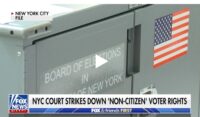
von Spakovsky: Non-citizens voting in California: Judge says no, even in left-wing state
Sometimes, common sense can prevail – even in far-out California. Last week, California Superior Court Judge Richard B. Ulmer Jr. ruled that only U.S. citizens have the right to vote. In this, he echoed an earlier ruling by the New York Supreme Court.

The Latest Federal Takeover of Elections Violates Federal Law
Democrats haven’t stopped trying to take over elections, they just have new tactics to do so under voters’ noses.Employees throughout the federal government who are carrying out President Joe Biden’s executive order directing them to get involved in state elections are likely all violating the Anti-Deficiency Act, besides interfering in the election process and using federal resources in what seems to be a get-out-the-vote operation for the party in power in the White House.
Media Availability: Ambassador Ken Blackwell — The Most Despicable Vote Fraud
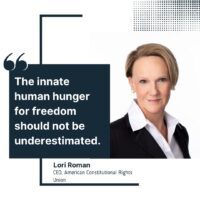
Attorney General and American Constitutional Rights Union director Edwin Meese III and Ambassador and ACRU board member J. Kenneth Blackwell warn against rampant abuse of our country’s most vulnerable voters — senior citizens. Since the ACRU launched its Protect Vulnerable Voters initiative, troubling reports of vulnerable voter abuse have streamed in.
It’s Not Too Late to Protect Our Elections
We're hearing many states are still struggling to staff poll workers for the upcoming elections. One of the most important things we can do to defend free and fair voting is to get involved and be present when and where votes are cast.
Hans von Spakovsky: Latest Election Fraud Cases Underscore Importance of Election Integrity
With the latest cases of impersonation, registration fraud, absentee ballot fraud, bribery, and illegal vote trafficking added to The Heritage Foundation’s Election Fraud Database, the database now contains 1,365 proven instances of election fraud. These cases demonstrate the wide variety of ways in which bad actors set out to submit fraudulent ballots or steal elections.The database is not an exhaustive or comprehensive list of all election fraud in the states. Rather, it presents a sampling of recent, proven instances of election fraud from across the country that is intended to highlight the many ways in which fraud has been committed.
Hans von Spakovsky: Ensuring That Only US Citizens Vote
The latest politically motivated lawsuit—filed against Arizona by the Biden Justice Department over the state’s new law attempting to verify the citizenship of registered voters—demonstrates the importance of a bill just introduced by Rep. Gary Palmer, R-Ala., HR 8223, that would stop that lawsuit in its tracks.